
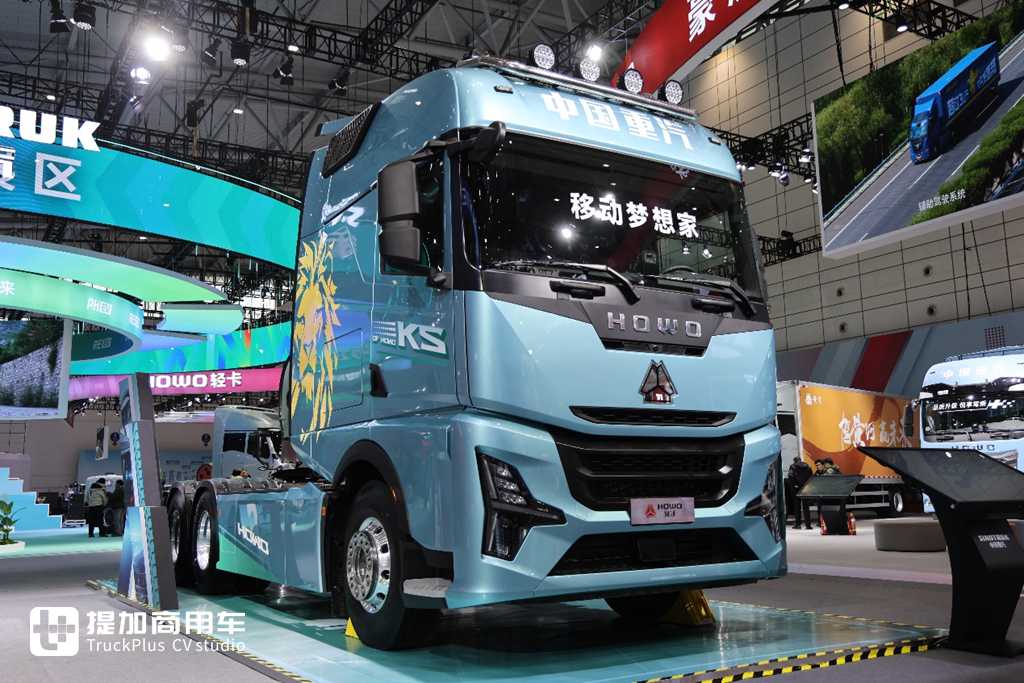
At Sinotruk’s 2025 Annual Conference, a vehicle named the Mobile Dreamer made its debut, boasting an all-new cab design, a state-of-the-art powertrain and a revolutionary chassis architecture. It immediately captured the attention of truck enthusiasts, who were eager to know when it would be officially launched and whether it would be badged under the Sitrak or Howo brand. At the 2026 Sinotruk Group Partner Conference, Sinotruk finally provided the answer.
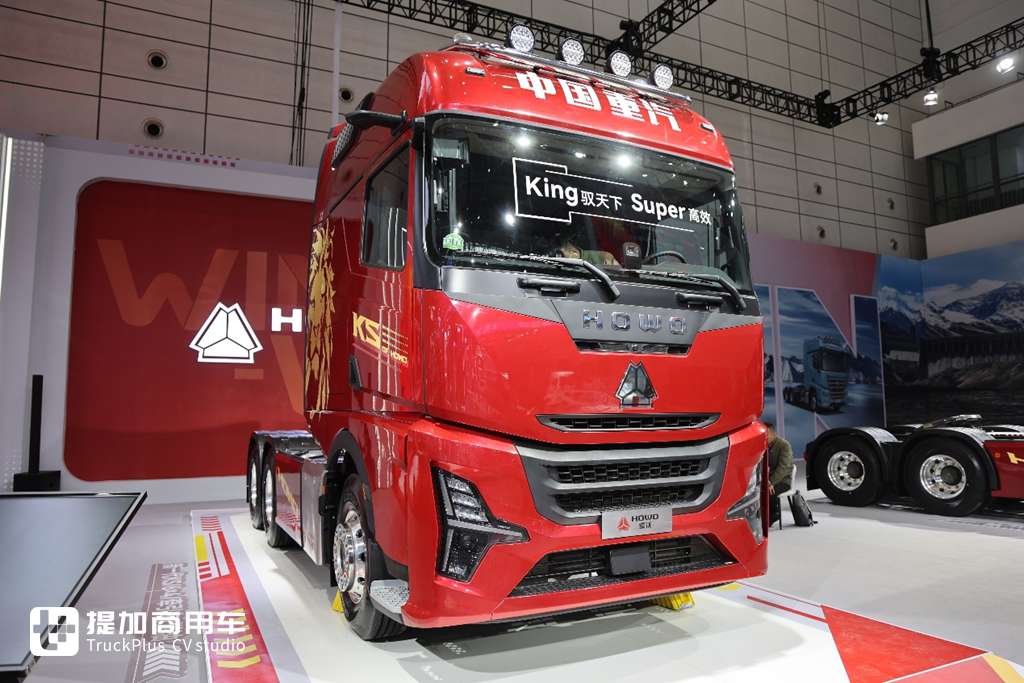

Officially named the Howo KS, the acronym stands for King + Super – a designation that fully underscores its premium positioning and Sinotruk’s high expectations for its market performance. As the most luxurious heavy truck ever produced by Howo, it has piqued the interest of many truck fans. Let’s take an in-depth look at this remarkable model.
Two Cab Sizes Available, Fighter Jet-Inspired Exterior
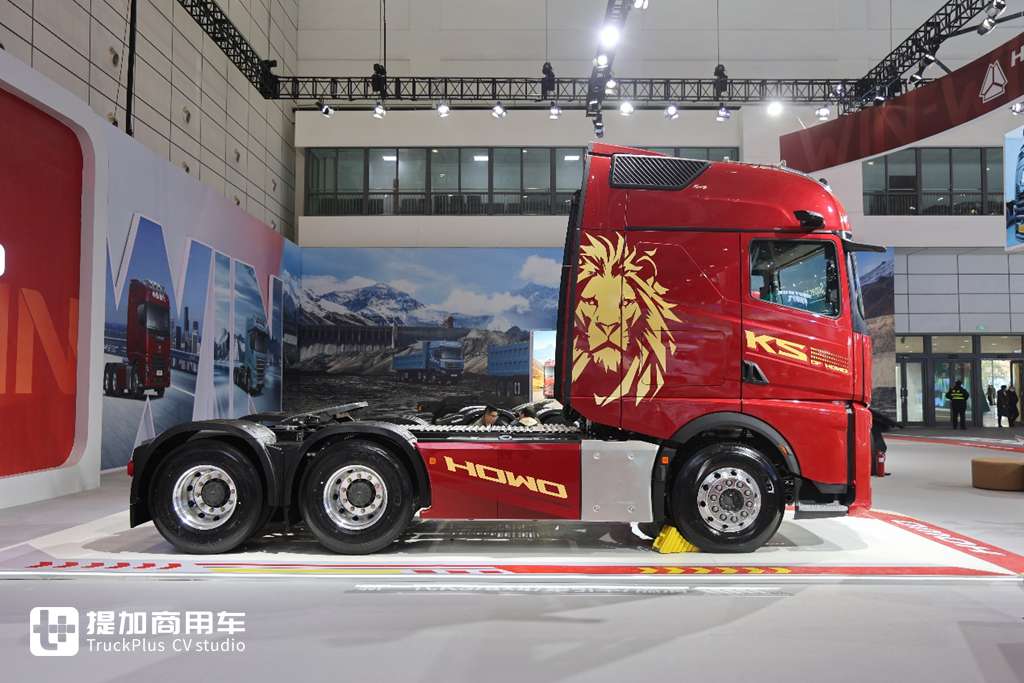
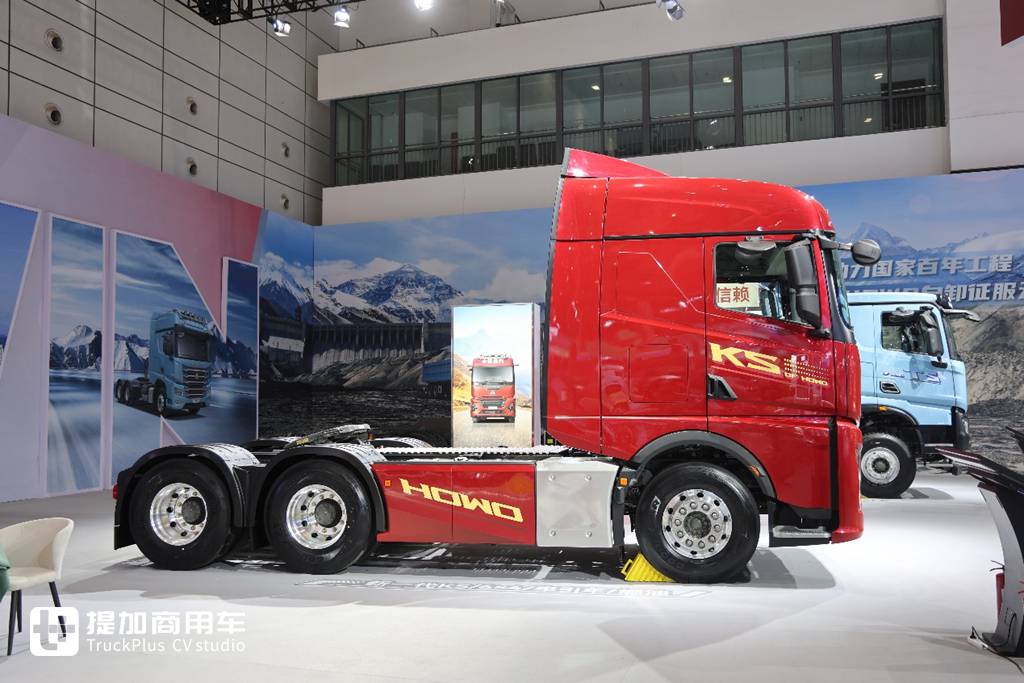
The Howo KS offers two cab options: a standard version and an extended version. The extended cab measures 2.5 meters in both length and width, with an additional roof height increase. The two images above show the side profiles of the extended and standard cabs respectively. Using the muffler as a reference, you can clearly see the difference in the cab’s rear wall and the gap between the deflector’s trailing edge and the top of the muffler, which highlights the extended cab’s larger dimensions. Judging by the roof air intake and deflector design, the extended cab of the Howo KS is nearly at the maximum legal height limit of 4 meters for commercial vehicles in China.
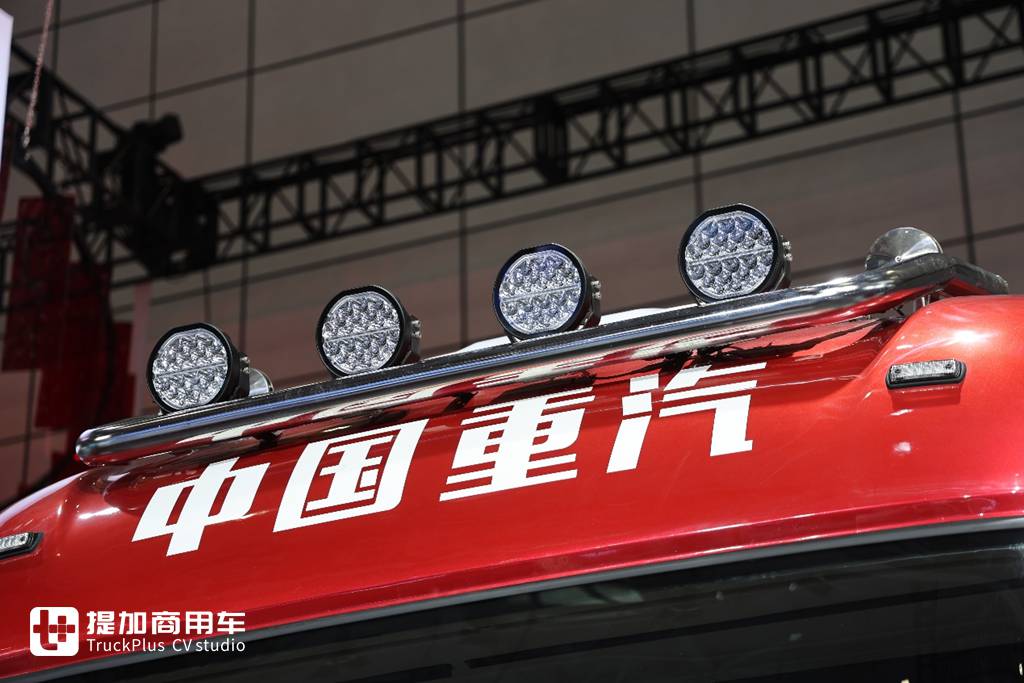
The roof of the Howo KS is fitted with a newly added spotlight kit, which Sinotruk referred to as the “Golden Shine” at the launch event. These spotlights serve a single yet practical purpose: auxiliary lighting. Equipped with LED bulbs, they are mounted on a stainless steel tubular frame that is bolted to the roof on three sides.
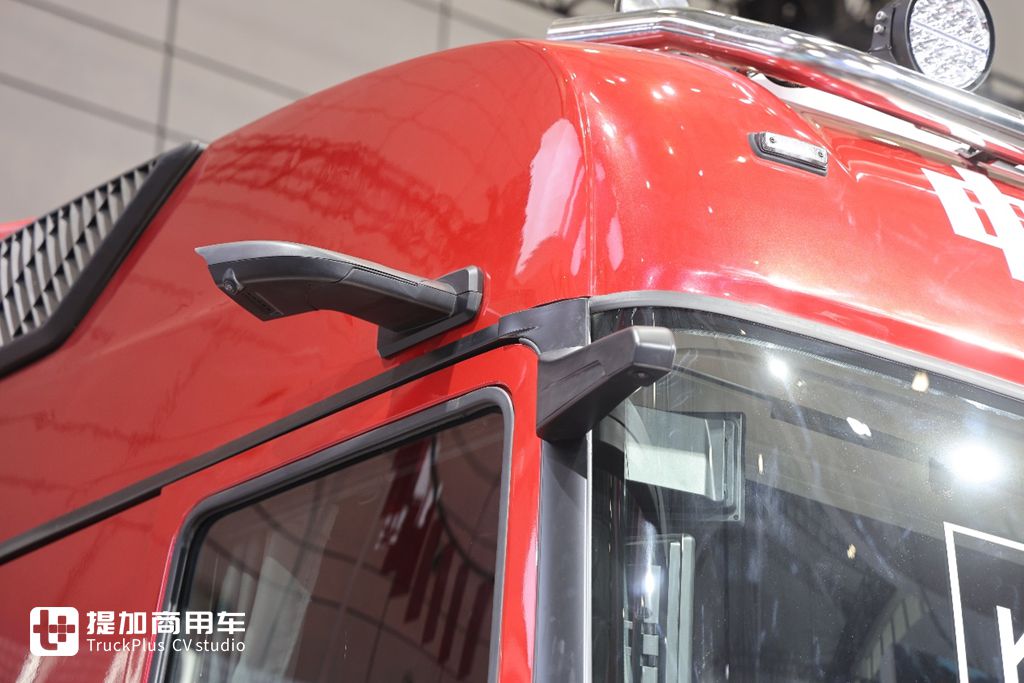
The top-of-the-line model comes with digital side mirrors + downward-view cameras, which provide a clearer rear view at night compared to traditional physical mirrors while also reducing wind resistance. If you are familiar with Sitrak models, a glance at the small marker lights on the roof will reveal the origin of the Howo KS cab.
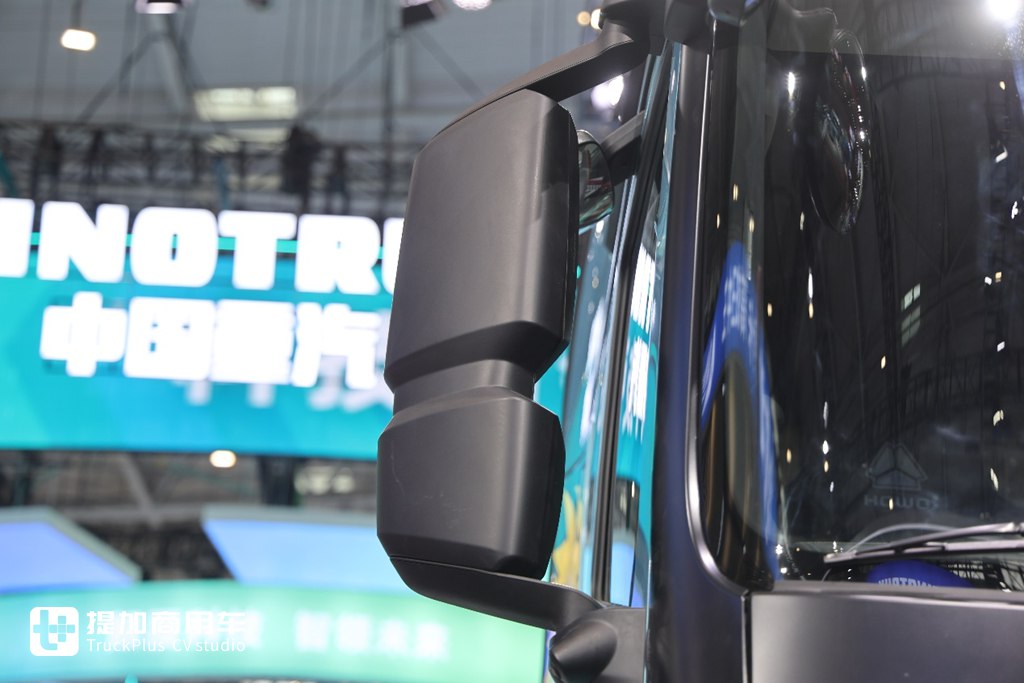
Physical mirrors are also available as an option, featuring a standard configuration with the main mirror on top and the secondary mirror below. Both support electric adjustment and heating – a standout feature of Sinotruk vehicles is that even the secondary mirror is electrically adjustable. This proves invaluable when navigating narrow spaces, allowing drivers to tilt the secondary mirror downward for a clearer view of blind spots.
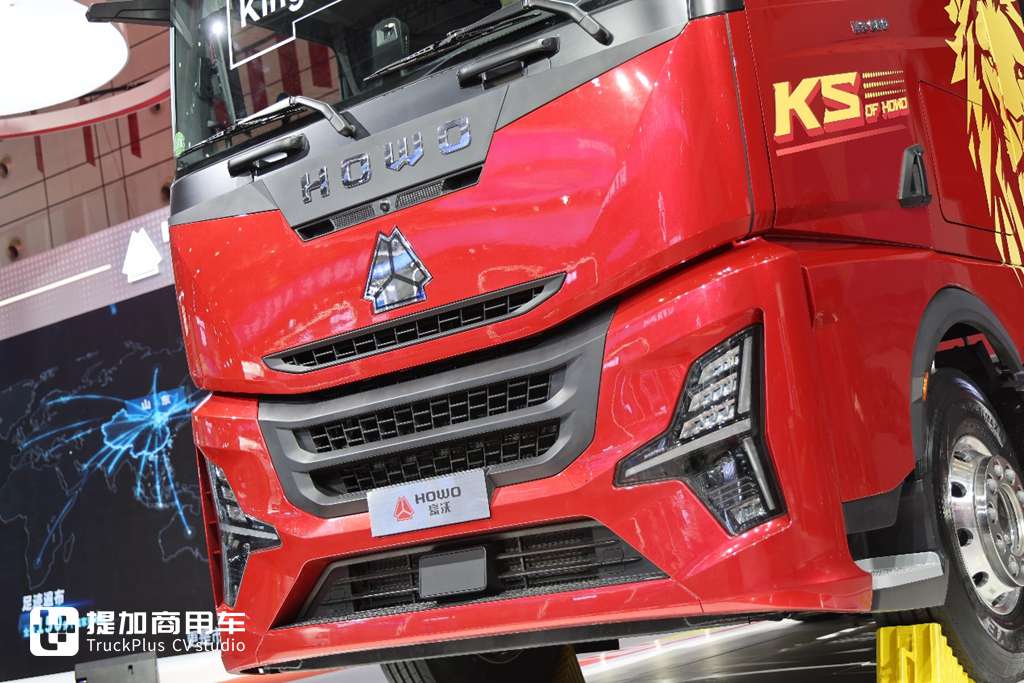
The vehicle’s exterior draws inspiration from fighter jets. Its three-stage irregular grille and headlight design lend the front fascia an aggressive, diving stance. The striking color contrast between the red metallic paint and matte black on the front further enhances its bold appearance, marking a dramatic departure from the styling of previous Howo heavy trucks. This new design language not only gives the Howo KS a more commanding presence that aligns with modern industrial aesthetics, but also elevates the overall quality of the vehicle to new heights.
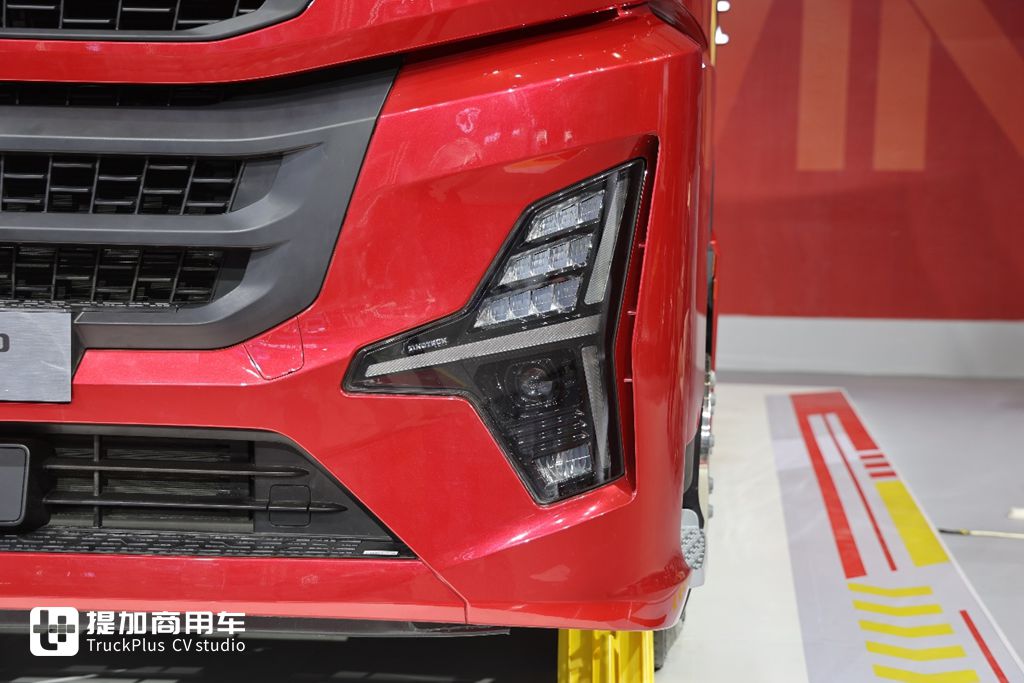
The fighter jet wing-shaped headlights integrate high beams, low beams and fog lights into a single unit, all powered by LED sources. The low beams are additionally equipped with lenses for improved light projection. A air diversion channel is designed along the outer edge of the headlights, which redirects oncoming airflow. When driving in rainy weather, this design helps suppress splashes from the wheels, keeping the vehicle’s sides clean.
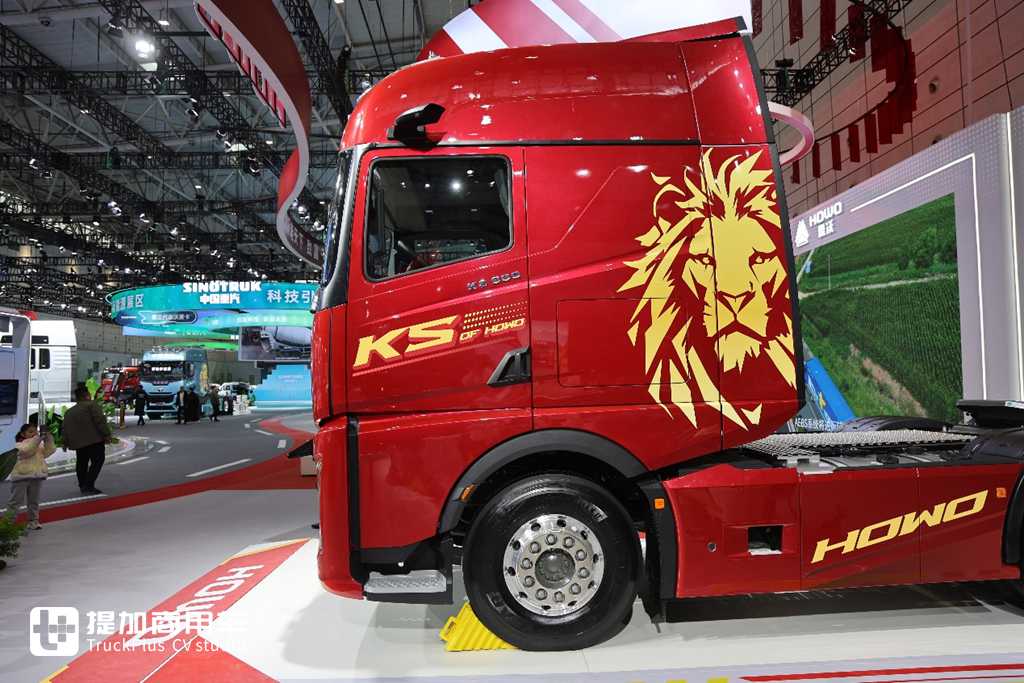
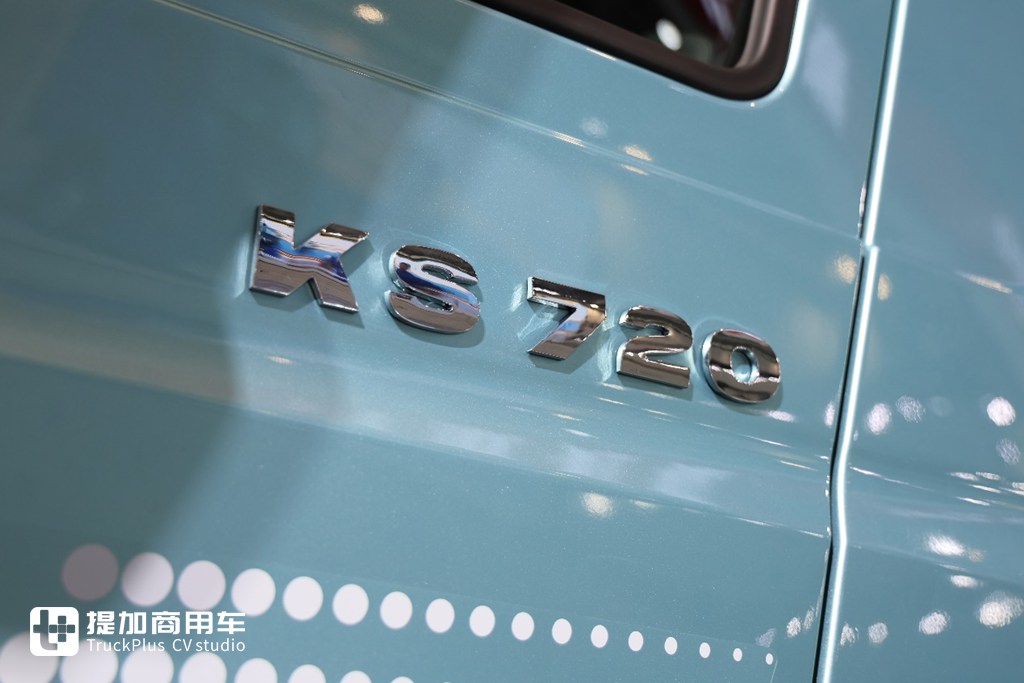
The Howo KS cab’s body-in-white is upgraded based on the Sitrak MAN technology molds, but it features a completely new set of exterior panels. This makes it difficult to recognize its roots unless you carefully examine the proportions of individual components. However, clues can still be found in the roof design and the size ratio of the bumper to the grille. The side of the Howo KS is adorned with decals, including English lettering and a lion head logo – the latter of which carries a subtle significance that is worth pondering.
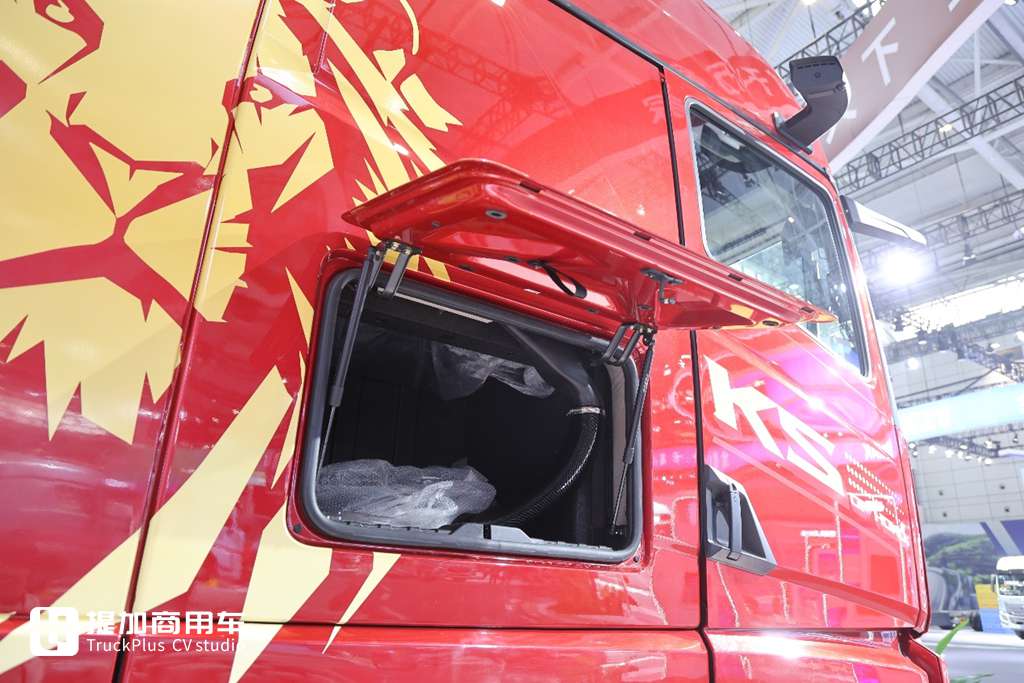
With the extended cab length, the storage compartments have also been enlarged, featuring wider openings and increased internal capacity. The compartment doors are supported by dual hydraulic struts and sealed with gaskets around the perimeter, preventing water accumulation inside and eliminating the risk of door rust.
All-New Interior with Thoughtful Details, Spacious Cabin and 1.2m-Wide Sleeper Berth
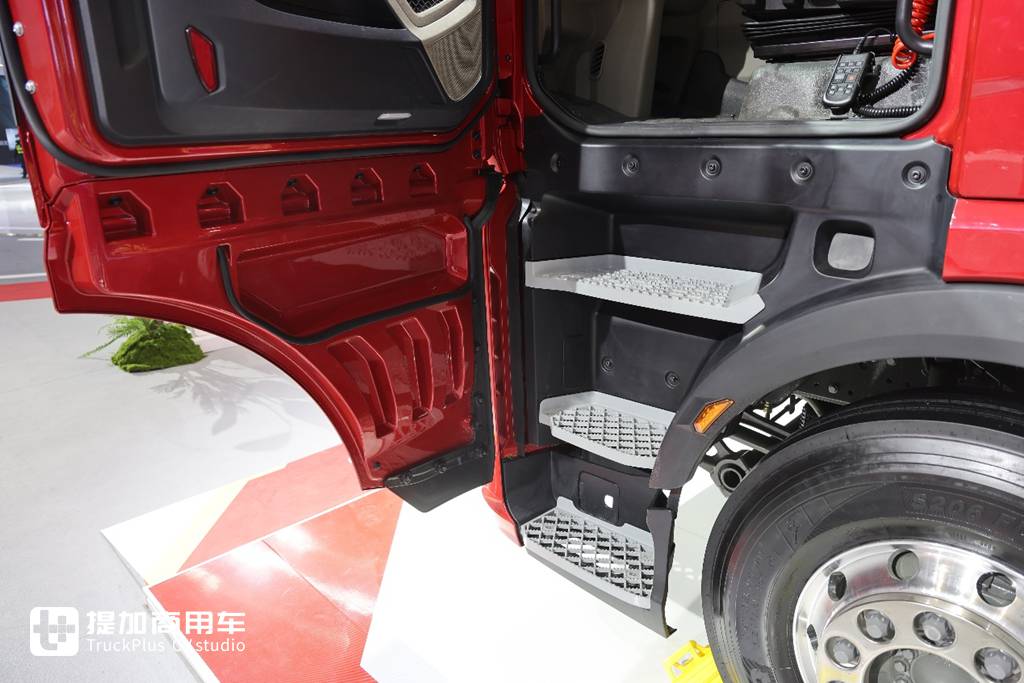
One easily overlooked yet thoughtful detail is the factory-installed shoe rack on the Howo KS. Recognizing that many drivers use separate shoes for inside and outside the cab to maintain cleanliness, Sinotruk designed the top step to be wide enough to accommodate a pair of large-sized shoes. A sealing strip is also installed on the door corresponding to this top step, ensuring that dust and muddy water cannot enter this area.
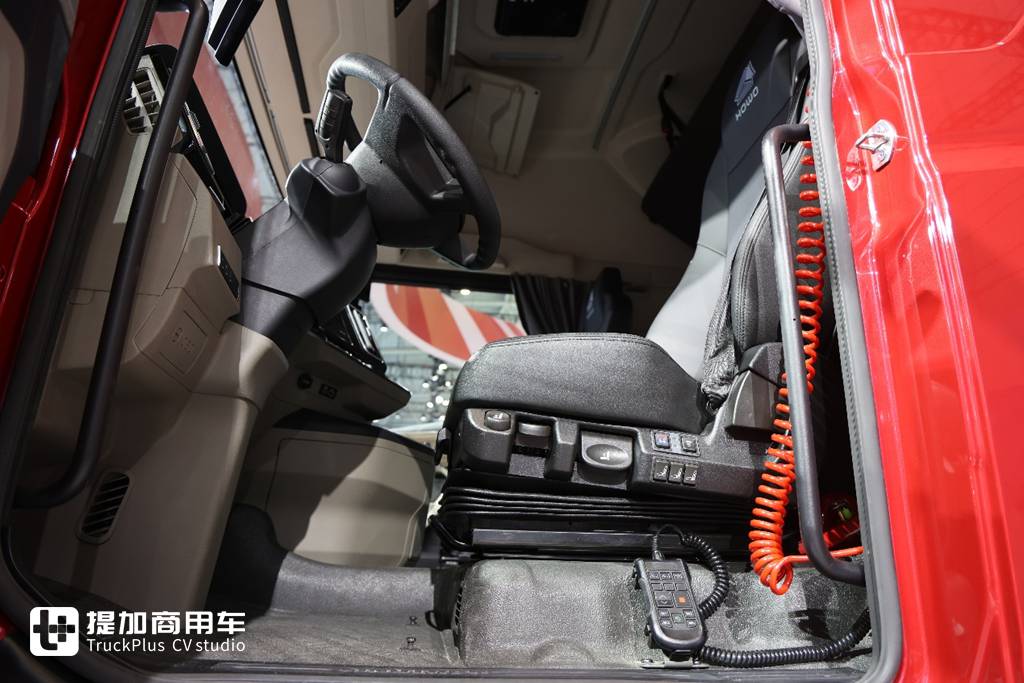
Both the driver and passenger seats are equipped with air suspension seats – a high-end configuration likely reserved for the display model. For regular production versions, the standard setup is expected to include an air suspension driver seat and a folding passenger seat. The driver’s seat is the Isringhausen NTS870 air suspension seat, a renowned premium product in the heavy truck industry. It offers a range of functions including damping adjustment, ventilation, heating, lumbar support and seat cushion length adjustment.
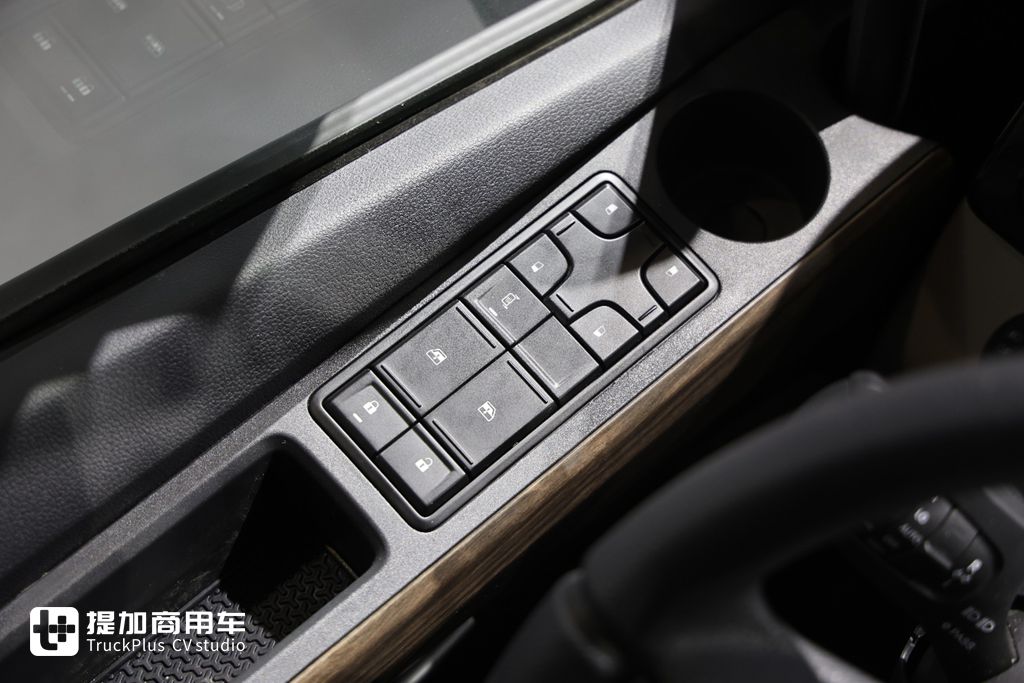
The control panel on the door features large, user-friendly buttons that are easy to press and resistant to accidental activation. It integrates controls for electric adjustment and heating of both the main and secondary mirrors, power window switches and central locking.
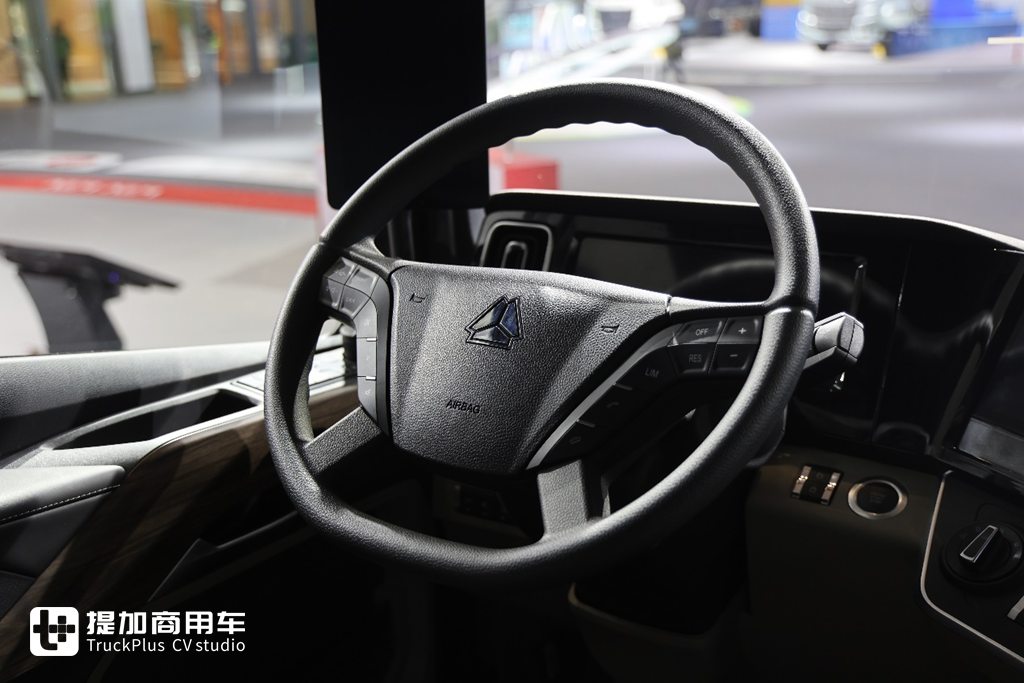
The steering wheel is Sinotruk’s current family-style four-spoke adjustable design, also used on Sitrak and Huanghe models. It incorporates cruise control and multimedia buttons. The steering wheel adjustment range has been expanded compared to previous models and uses a pneumatic locking mechanism, allowing drivers to achieve a more comfortable driving posture.
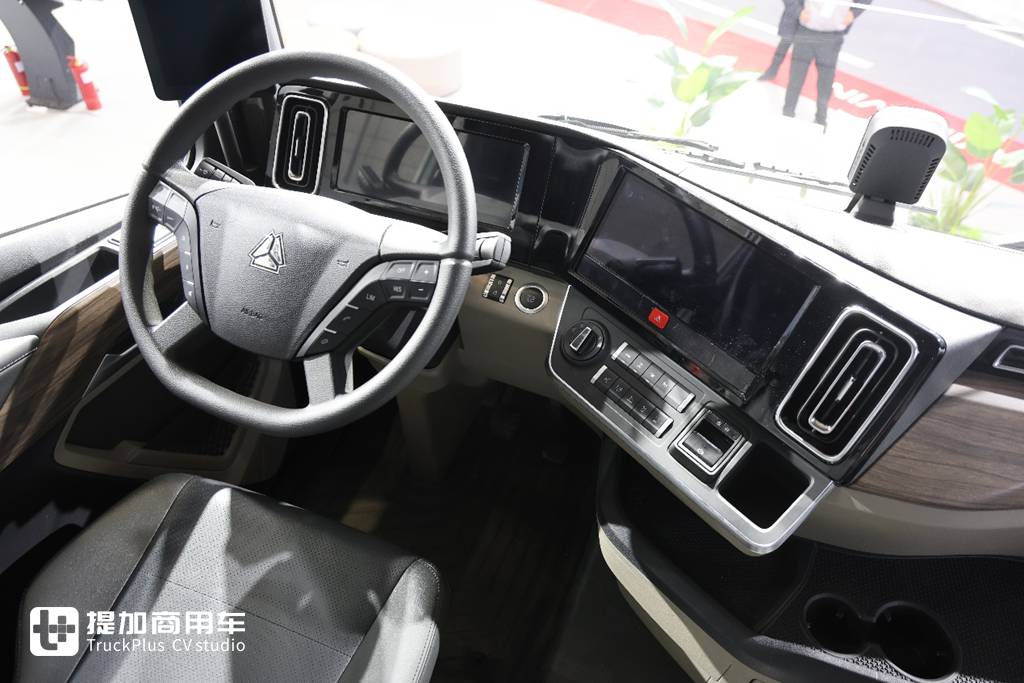
The dashboard follows a standard ergonomic design, with the functional area on the right tilted toward the driver for easy access to various controls. Both the instrument cluster and the infotainment system feature full LCD screens. The infotainment system is integrated with Sinotruk’s all-new AI assistant “Xiao Zhong”, which can control the air conditioning, windows, check fault codes, provide navigation guidance and more through voice commands.
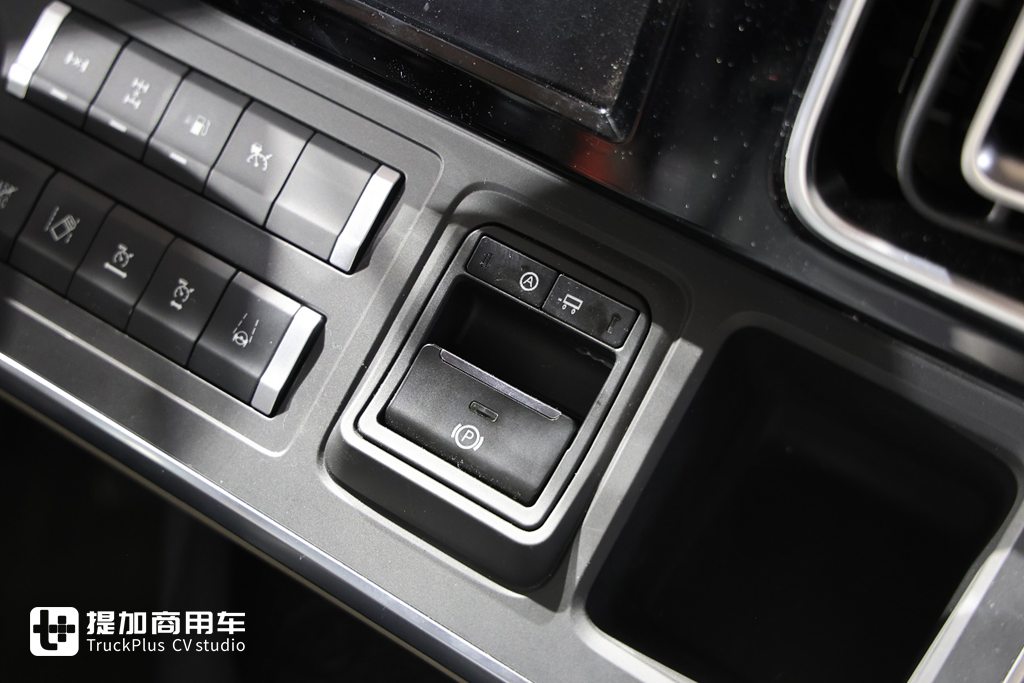
The interior buttons have been upgraded to electronic controls, and the parking brake is also an electronic handbrake with AUTO HOLD and trailer brake control functions.
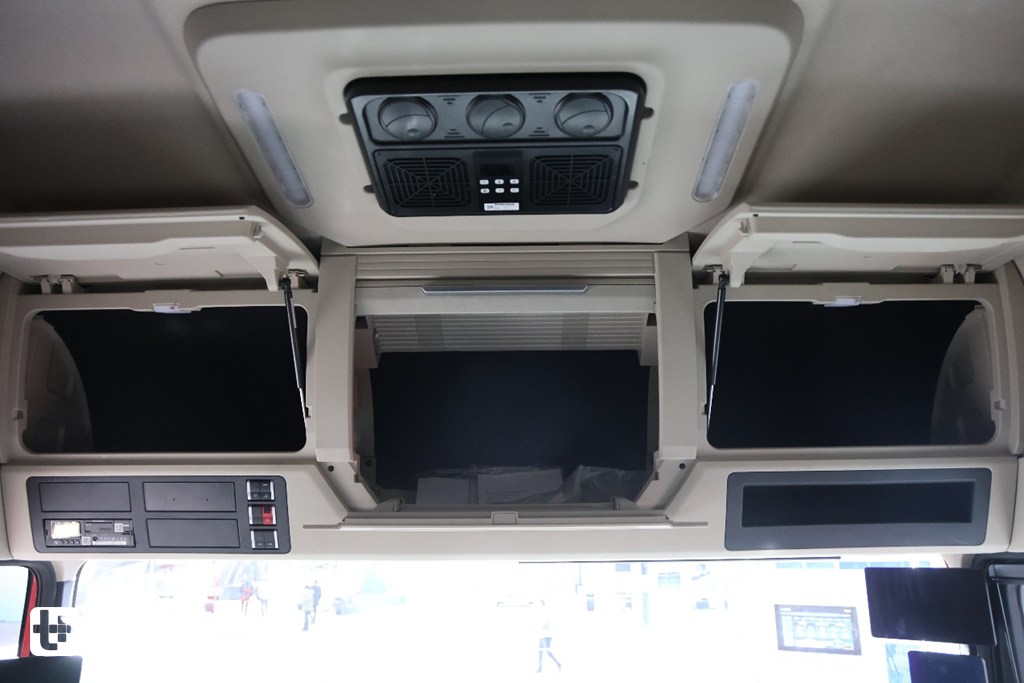
The overhead storage compartments in the extended cab of the Howo KS have also been upgraded, offering increased internal capacity. The left and right compartments are supported by hydraulic struts, while the central compartment features a roller shutter door, making it convenient for storing items of different types.
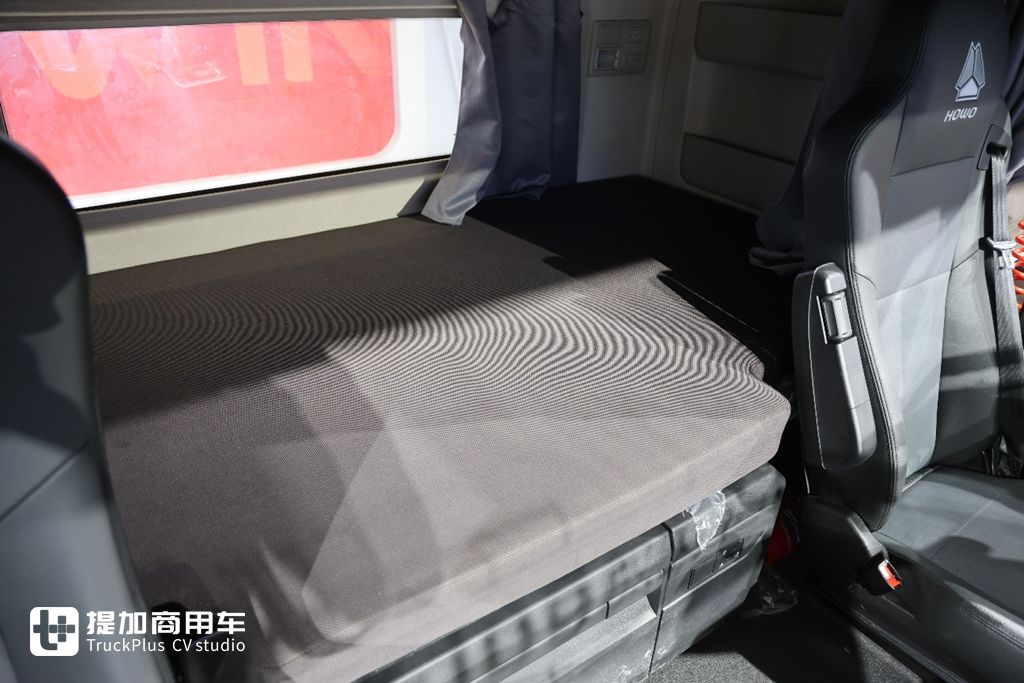
The sleeper berth boasts a maximum width of 1.2 meters. Even on natural gas-powered models, the berth size is not compromised by the rear gas cylinders. The mattress is generously padded – thick enough for comfort yet firm enough to ensure a good night’s sleep for drivers.
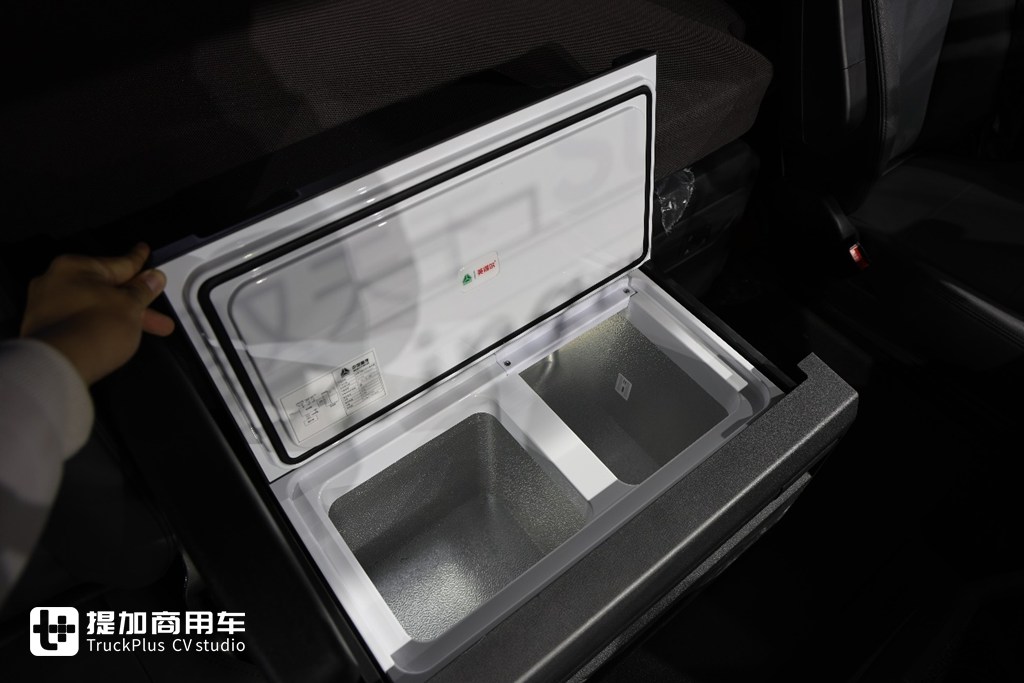
Under the sleeper berth, there is an on-board refrigerator and an inverter. The refrigerator is a custom-made unit by Indel for Sinotruk, featuring separate compartments that can store daily meals, beverages and other items in designated areas.
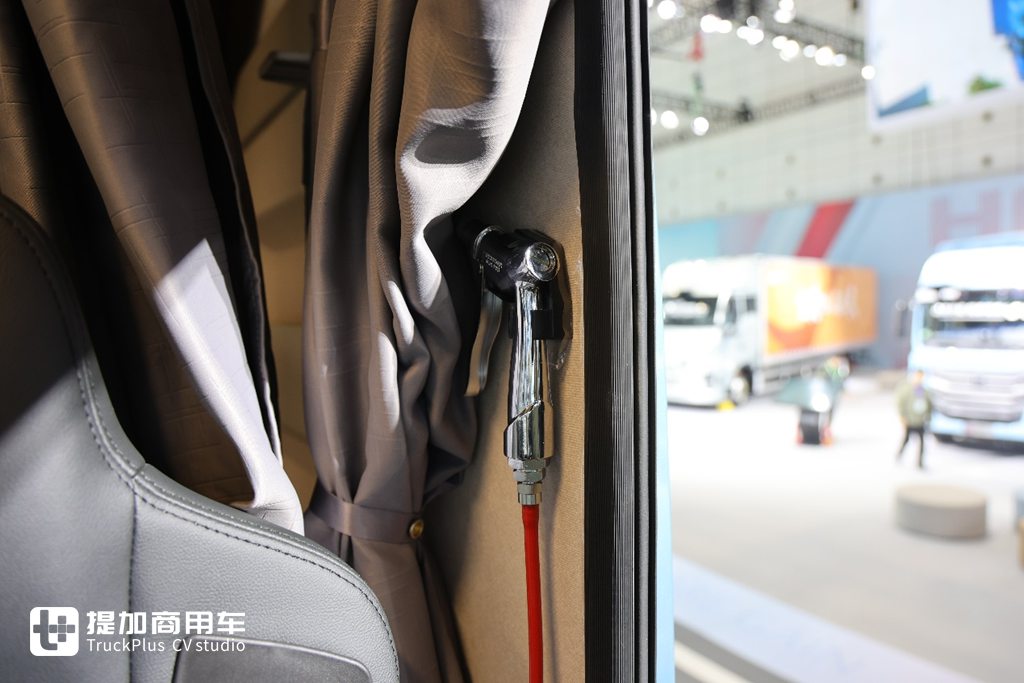
The cab is also equipped with a factory-installed dust blower, eliminating the need for post-purchase installation. The dust blower is made of metal for enhanced durability.
Multiple Fuel Options, Front Axle Air Suspension Added
This article provides a rare detailed view of the engine and engine compartment of the display model, allowing for a more thorough inspection. The Howo KS is available with both diesel and natural gas powertrains, with engine options including Weichai and MAN technology units. The display model is powered by the Weichai WP15T 2.0 engine, which achieves a thermal efficiency of 51.09% and a B10 service life of 1.8 million kilometers. It delivers a maximum output of 680 horsepower and an impressive 3,200 N·m of torque. Built on a high explosion pressure platform, its peak torque is available at a low 900 rpm – meaning it can generate maximum torque at under 1,000 rpm, resulting in significant fuel savings during high-speed cruising.
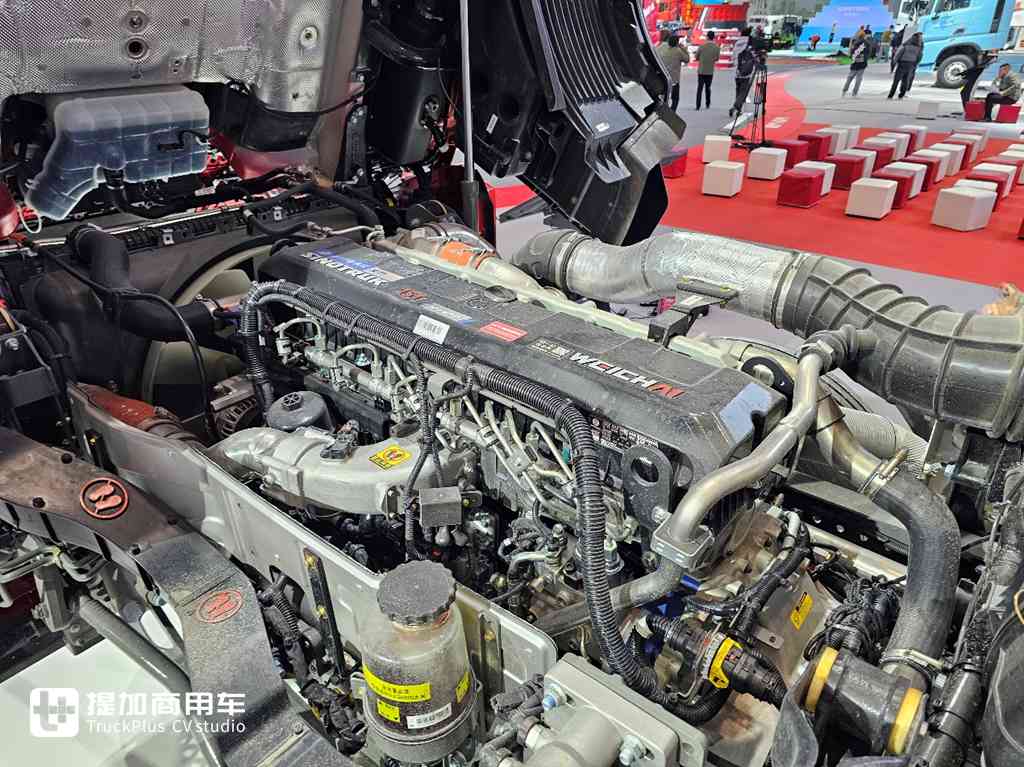
The MAN technology engine option is the MC13H full-power version, a 13-liter unit. Two variants were showcased at the event: a 570 horsepower model with 2,700 N·m of torque and a 620 horsepower model, whose torque figures were not disclosed at the time (we will report the details as soon as official data is available).
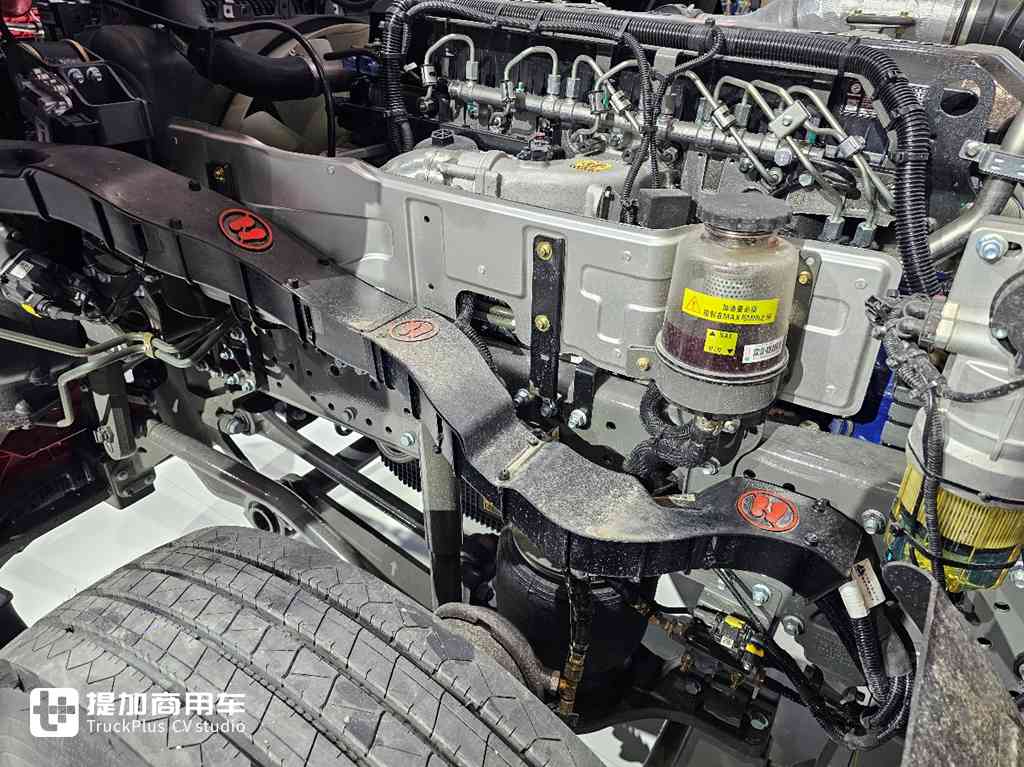
The build quality inside the engine compartment is truly commendable. Wiring harnesses and pipelines are concealed within plastic casings, which not only protects them from aging caused by long-term exposure to high temperatures and contaminants, but also prevents damage. Sound and heat insulation panels are also installed around the engine, resulting in a clean, tidy and well-organized engine bay that exudes the quality feel of European trucks.
Moving on to the natural gas-powered variant, a display model with 720 horsepower was presented at the event. Unsurprisingly, this model is equipped with the Weichai WP16NG 4.0 engine, hailed as the most powerful natural gas engine on the market. This 16-liter engine delivers 720 horsepower and 3,200 N·m of peak torque, leveraging Weichai’s 4.0 natural gas technology to achieve a 21% torque increase. Its peak torque is available across a broad rpm range from 800 to 1,350 rpm, effectively addressing the power deficit of natural gas engines when climbing hills. This allows the vehicle to maintain a higher gear ratio during ascents by 15.2%, enhancing both fuel economy and transportation efficiency – a significant advantage when operating in mountainous regions such as Southwest China.
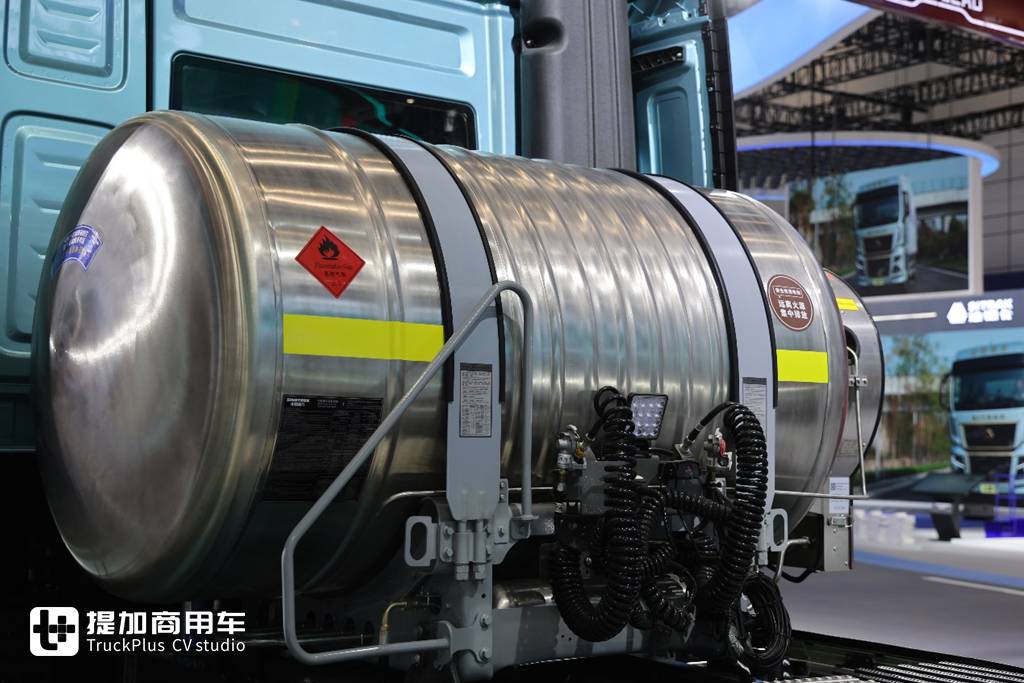
The gas cylinders are flagship products from CIMC Enric: 1,500L lightweight cylinders with reinforcing ribs running along the middle. The cylinder wall thickness has been reduced from 7mm to 5mm, achieving weight savings while maintaining structural integrity.
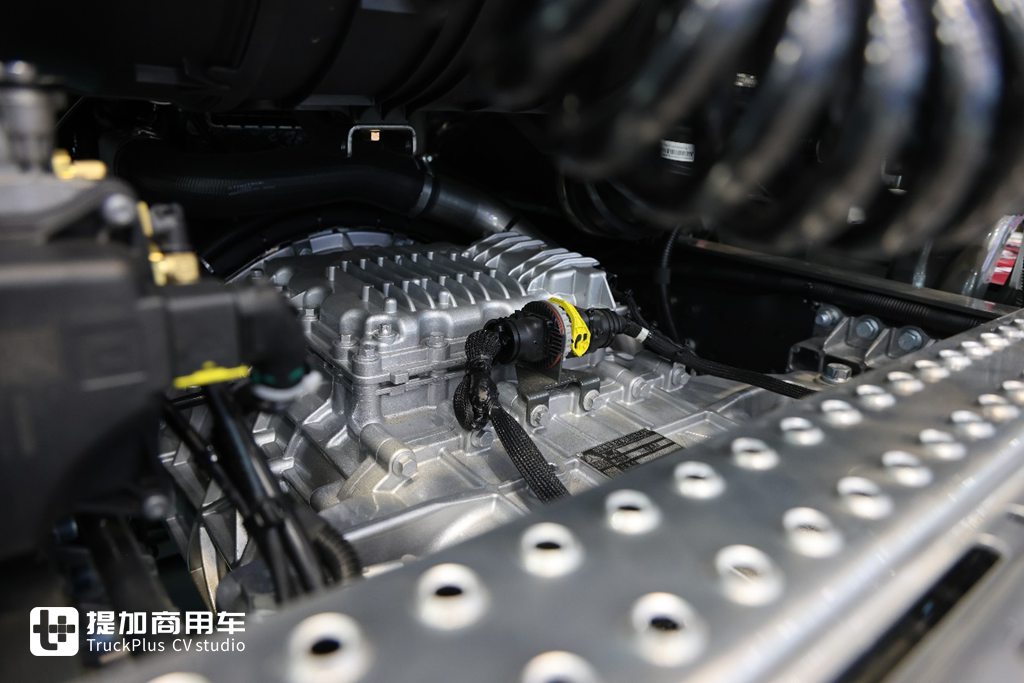
Two transmission options are available: the ZF TraXon Generation II 12-speed transmission + ZF hydraulic retarder, or the all-new Sinotruk 14-speed transmission + Dynex hydraulic retarder – both of which are premium products in the industry.
The all-new Sinotruk 14-speed transmission is based on the 12-speed model, with the addition of an ultra-low first gear and an overdrive gear. This gives the transmission the high efficiency of a direct drive gear, the high cruising speed of an overdrive gear and greater torque output capability.
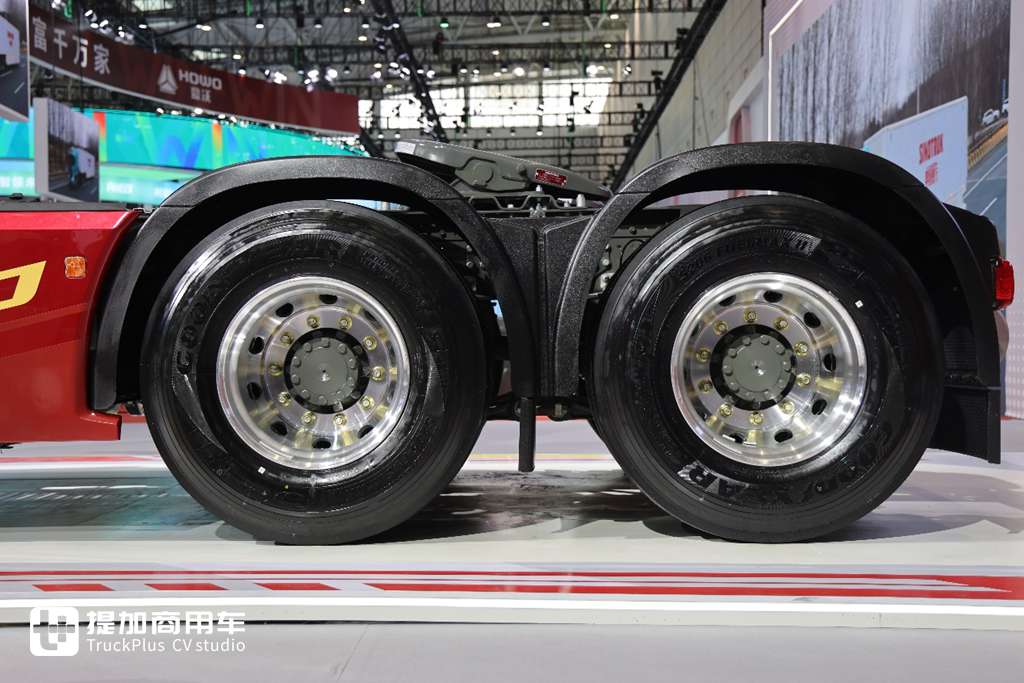
The rear axle is a new MAN technology single-reduction axle, paired with a 2.85 gear ratio for direct drive transmissions or a 3.36 gear ratio for overdrive transmissions. The tire specification is 12R22.5, with Goodyear B+ grade low rolling resistance tires fitted across all wheels, paired with aluminum alloy rims to achieve both fuel efficiency and lightweighting.
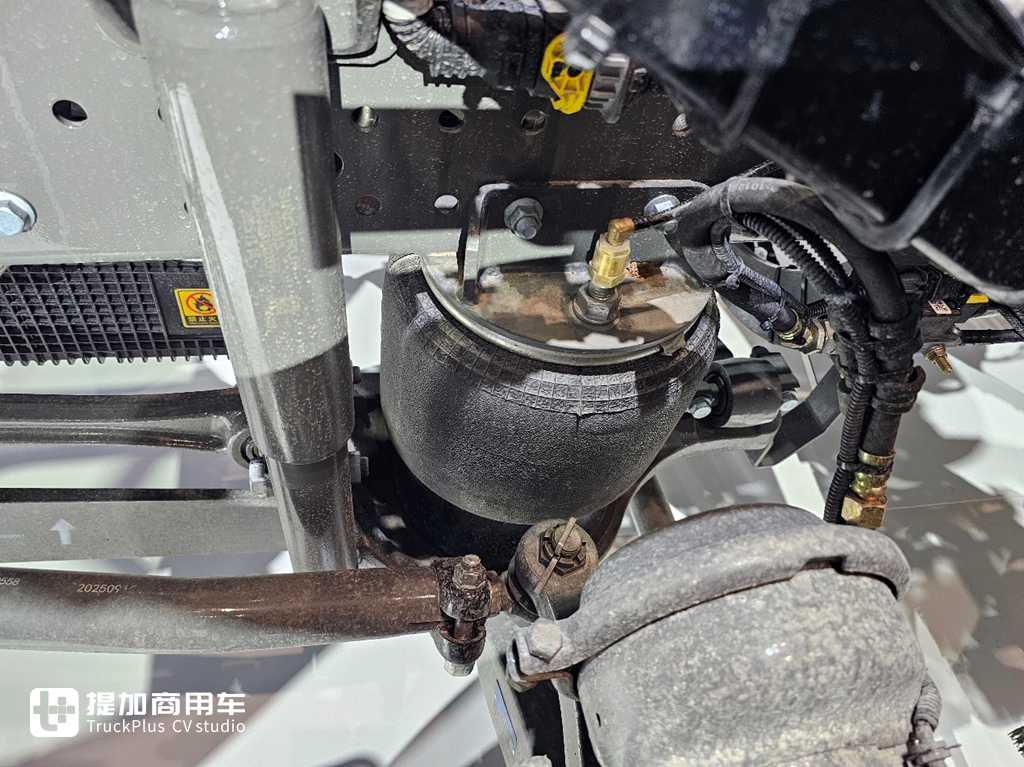
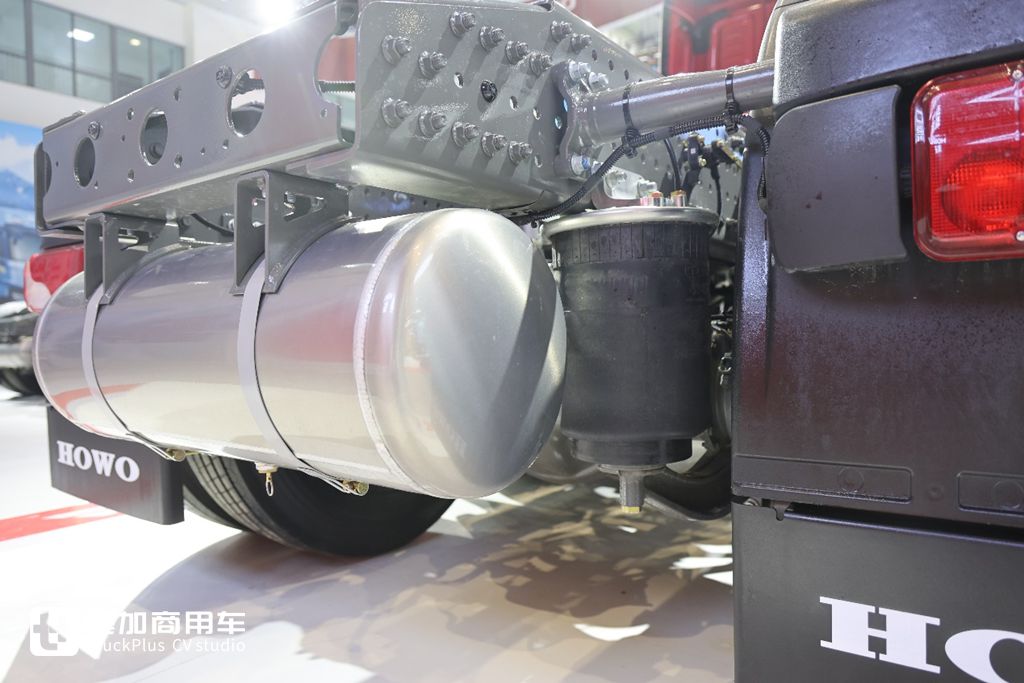
The top-spec Howo KS display model is equipped with front and rear air suspension, making it one of the few domestic heavy trucks to feature front axle air suspension. The vehicle is fitted with a total of 10 airbags, arranged in a 2-front, 8-rear configuration, which delivers a noticeably improved ride comfort. The air suspension also supports WABCO’s ECAS electronic control system, allowing drivers to adjust the height of the front and rear axle airbags via the in-cab control panel. This enables optimal ground clearance for trailer coupling, navigating rough terrain and high-speed cruising.
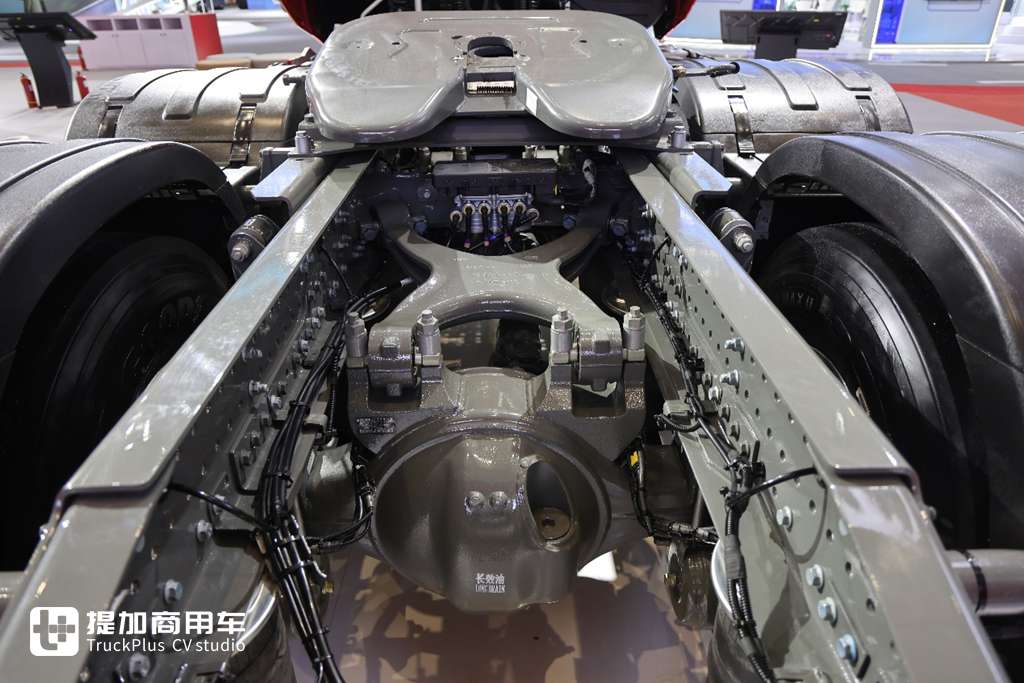
On Sinotruk’s new chassis, air suspension-equipped rear axles use X-type thrust rods, while leaf spring suspension models use V-type thrust rods. The X-type thrust rods, when paired with air suspension, provide superior chassis stability, preventing axle displacement and significantly enhancing driving safety.
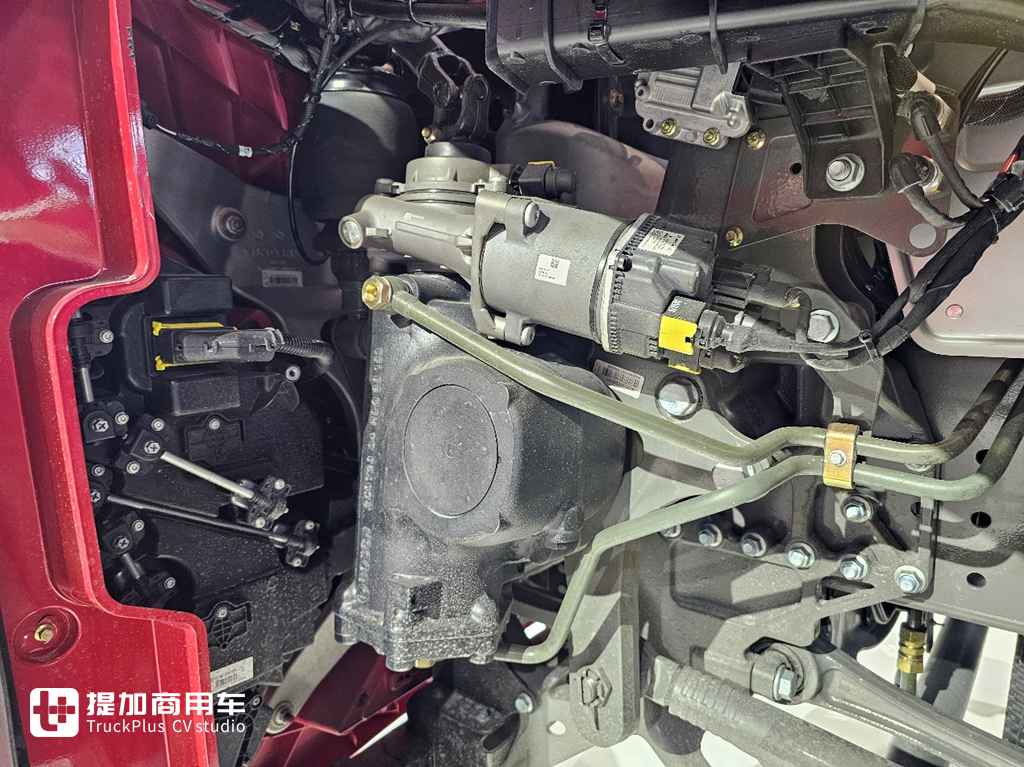
The steering system is a Bosch electro-hydraulic power steering gear, which flexibly adjusts the steering assist force based on vehicle speed. Additionally, this system enables lane self-correction functionality: if the vehicle detects lane departure, it sends a correction signal to the steering gear, which automatically adjusts the steering wheel to keep the vehicle centered in its lane. Of course, this function requires a full suite of active safety systems, including EBS and a steering angle sensor.
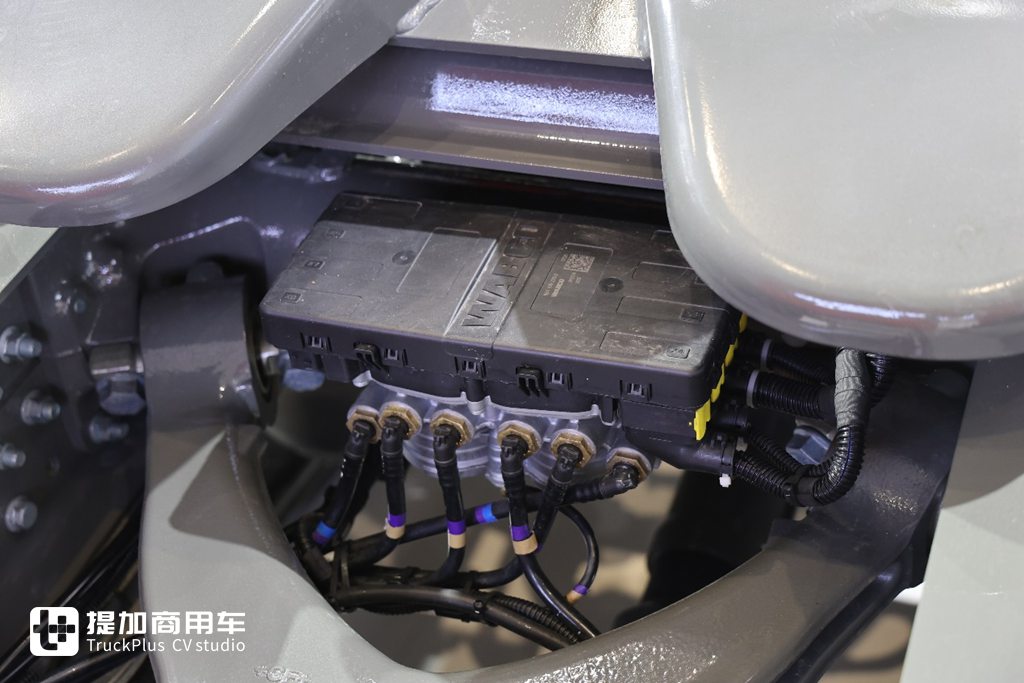
Accordingly, the vehicle is equipped with the latest WABCO EBS system, with all braking components supplied by WABCO – ensuring maximum braking safety.
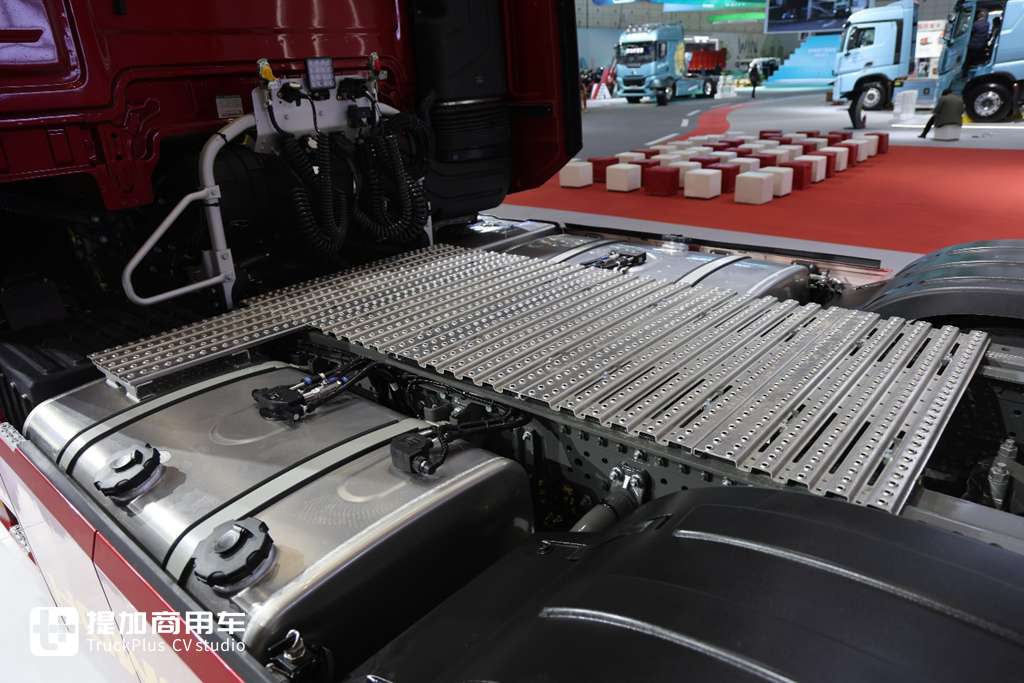
The display model features a dual-fuel tank setup. The left fuel tank is a split-chamber tank, with the smaller chamber designed for winter-grade diesel to facilitate cold-starting in frigid conditions. Both fuel tanks are equipped with heating functions. As seen in the images, the chassis is well-protected with stainless steel panels extending all the way to the fifth wheel, ensuring the safety of personnel standing on the chassis while also providing effective protection for the chassis components.
Epilogue
From the stunning debut of the “Mobile Dreamer” concept at the 2025 Sinotruk Annual Conference to the official launch of the Howo KS in 2026, Sinotruk has demonstrated its profound innovation capabilities and forward-looking vision with a premium heavy truck that integrates cutting-edge design, advanced technology and user-centric features. The Howo KS is not only the pinnacle of Howo’s heavy truck lineup, but its innovative design philosophy also sets a benchmark and paves the way for the advancement of high-end domestic heavy trucks. Furthermore, it lays a solid foundation for Sinotruk to enter more sophisticated overseas markets, such as the European truck market.
原创文章,作者:ctinsa,如若转载,请注明出处:https://ctinsa.com/truew/7900
